How VPPs help stabilize the grid with high renewable penetration
What problem does a VPP solve?
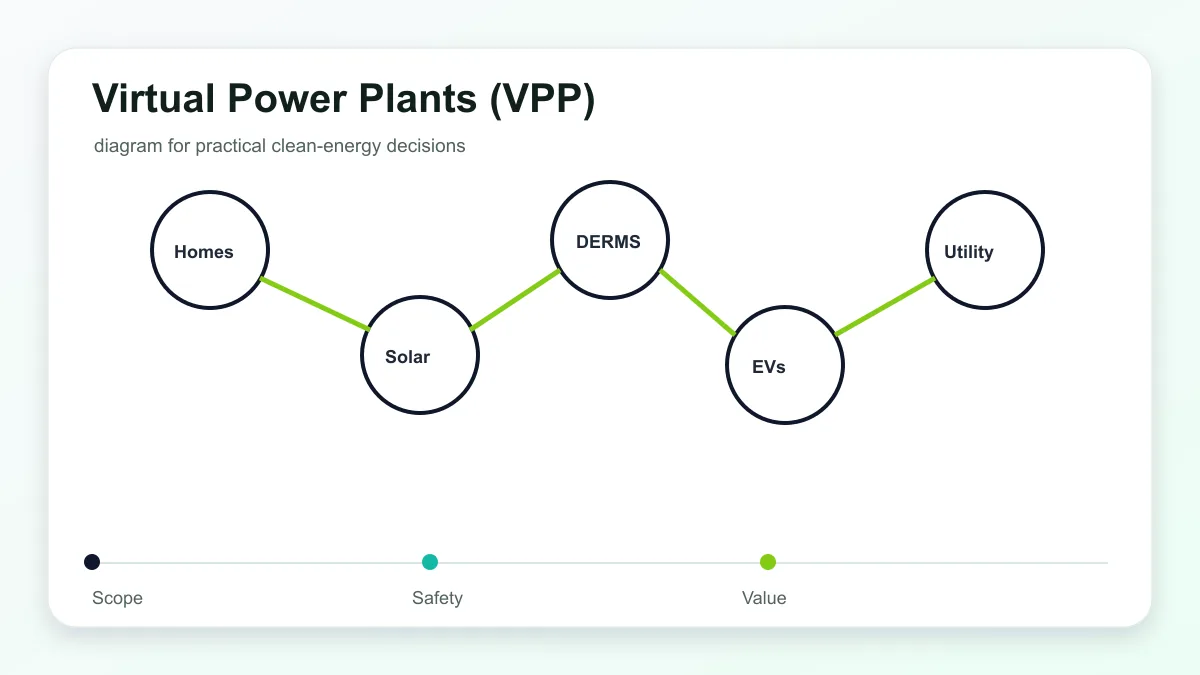
A virtual power plant helps the grid by coordinating many small devices. Home batteries, EV chargers, thermostats, water heaters, and solar inverters can reduce demand or send power when the grid is stressed. The user problem is whether joining a program helps without hurting comfort, range, or backup reserve.
How it stabilizes renewable-heavy grids
Solar and wind output moves with weather. Demand does not always move with it. A VPP can shift flexible loads, discharge batteries, delay EV charging, or reduce air conditioning for short periods. That can reduce ramping pressure and avoid firing up expensive peak plants.
Homeowner decision checklist
Check the payment, dispatch frequency, opt-out rule, device control limit, battery reserve setting, EV minimum charge, and privacy terms. A good program states when it can control devices and how the owner can override it.
Risks to watch
Do not join a program that can drain backup reserve before storms. Do not join if EV charging control can leave too little range. Do not accept vague payment claims without the actual tariff or program terms.
Practical recommendation
A VPP is best when the device already exists and the program pays for flexibility the owner can spare. It is weaker when the owner must buy expensive hardware only for uncertain payments.
References
Related Articles