How does vehicle-to-grid technology work?
What does V2G actually do?
Vehicle-to-grid lets an EV send power back to the utility system. It is not the same as running a tool from the car or backing up a house. True V2G needs a compatible vehicle, bidirectional charger, utility approval, metering, and control software.
Power flow steps
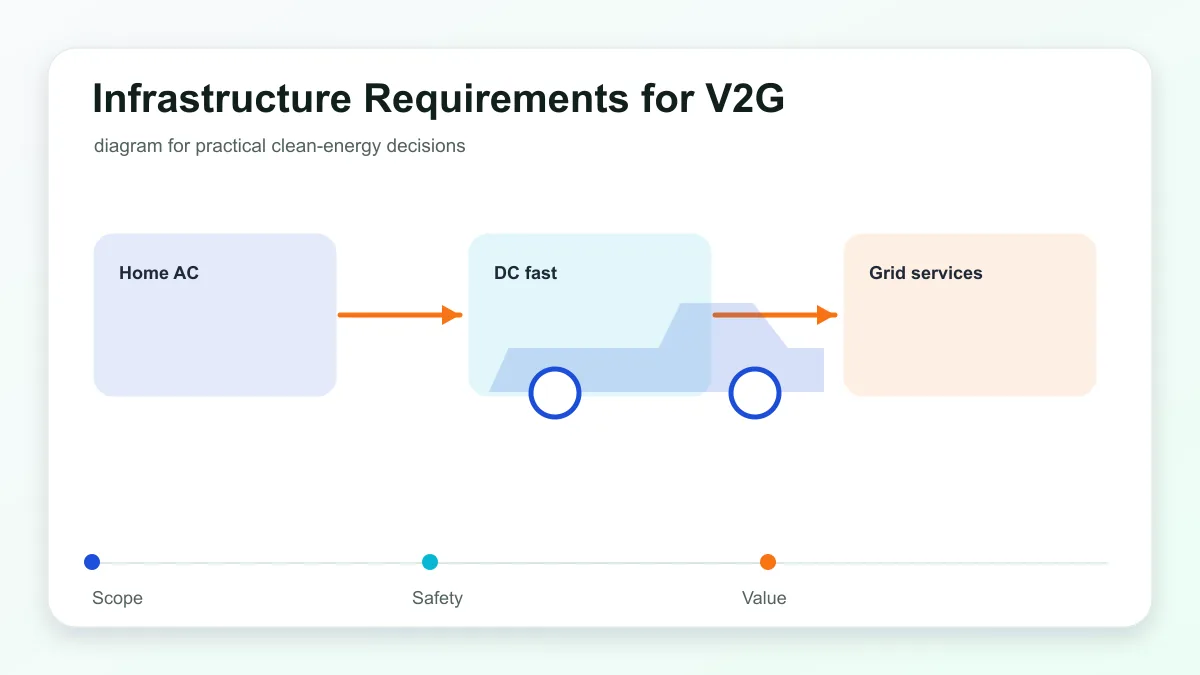
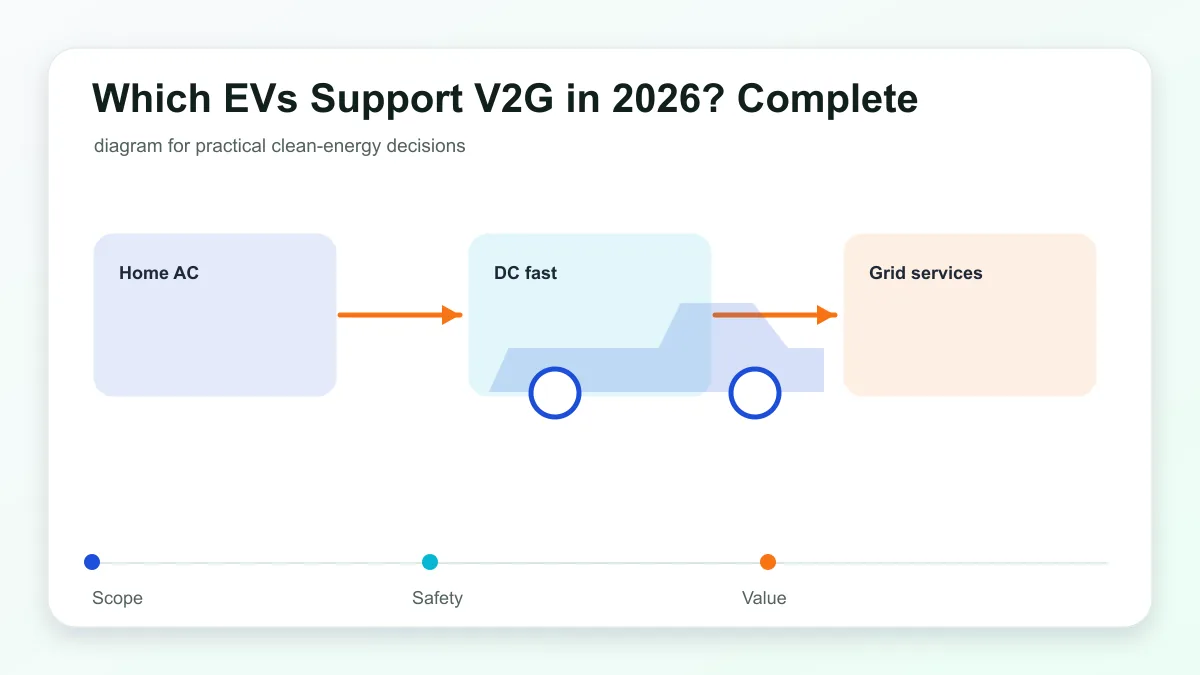
The EV battery stores DC power. The bidirectional charger converts and controls power flow. The utility or aggregator sends dispatch signals. The system protects a driving reserve and records energy exported.
Hardware and approval
The owner needs the right EV, charger, electrical design, interconnection approval, and often a program contract. For home backup, safe isolation from the grid is essential.
Risks
The main risks are unsupported vehicle models, unclear warranty language, weak payment terms, and charger installs that happen before utility approval.
Practical recommendation
Treat V2G as a local program decision, not just a vehicle feature. Buy only when the vehicle, charger, utility, installer, and warranty all support the same use case in writing.
References
Related Articles